
How to Search Genesee County Traffic Court Records
Genesee County traffic cases are searchable through MiCOURT, the statewide public case system. It covers the 67th District Court, where traffic matters are filed. The search runs on a name or a case number, and it lists hearing dates and dispositions. The 67th District Court sends the public into that system from its own site.
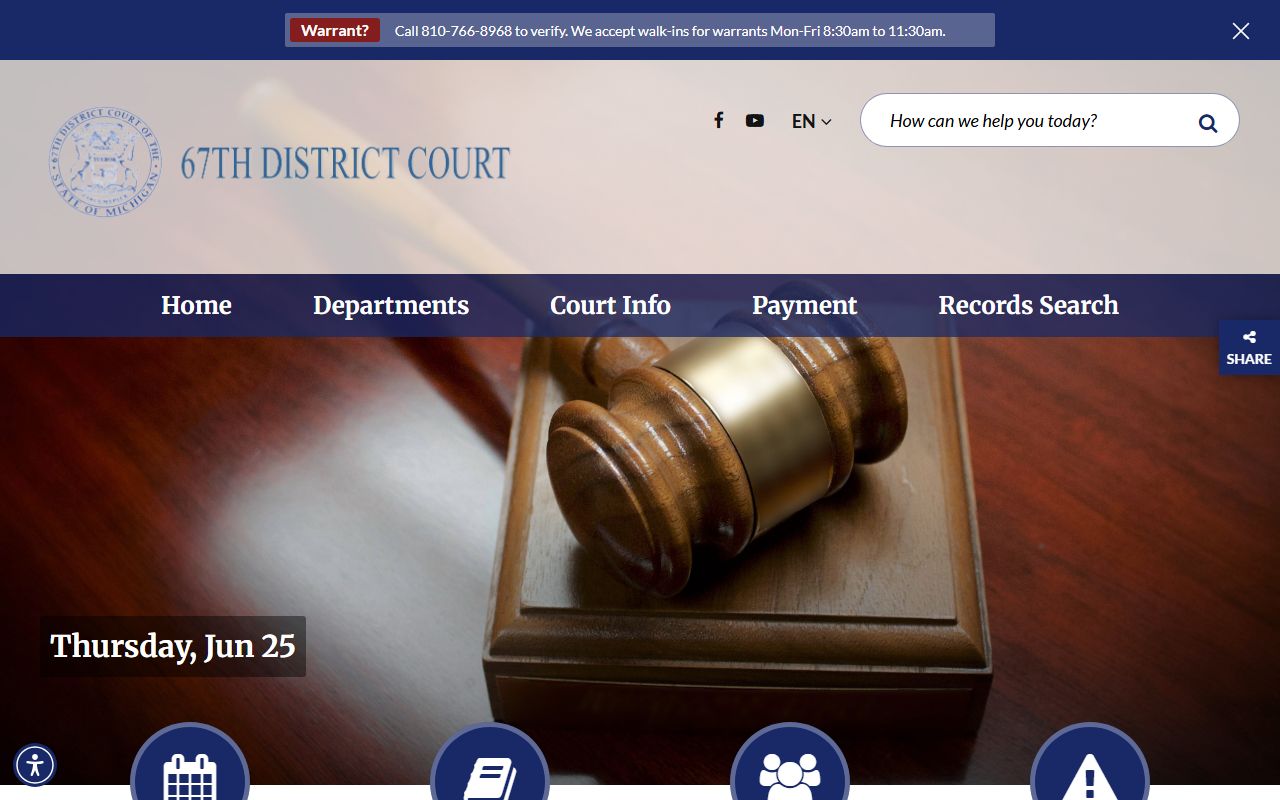
Have a few details ready before you start. A citation or case number is the fastest key. A full name and date of birth also work. The court's 67th District Court home page links to the records search and branch information.
- Open the MiCOURT public case search or the 67th District Court records page.
- Enter the citation or case number, or a driver's name and date of birth.
- Filter by court and date to trim a long name result.
- Open the case to read the charge, court date, and disposition.
- Pay, set a hearing, or request a copy from the branch court.
Which Courts Handle Traffic Cases in Genesee County
The 67th District Court handles traffic across Genesee County. There is no separate justice-of-the-peace or municipal traffic court layer here. Instead, the district court runs seven branch locations, and each serves specific cities and townships. Your ticket is heard at the branch tied to where it was written.
The branch structure matters when you need to call or appear. The table below lists each 67th District Court branch with its address and phone. The court's court locations page shows which towns each branch serves.
| Branch | Address | Phone |
|---|---|---|
| Flint (McCree Building) | 630 S. Saginaw Street, Flint, MI 48502 | 810-766-8968 |
| Burton (Division 2-B) | 4094 Manor Drive, Burton, MI 48519 | 810-743-5600 |
| Davison (Division 2-A) | 200 E. Flint Street, Ste 3, Davison, MI 48423 | 810-653-4126 |
| Fenton (Division 4-A) | 17100 Silver Parkway, Ste C, Fenton, MI 48430 | 810-629-5318 |
| Flushing (Division 1) | 1415 Flushing Road, Flushing, MI 48433 | 810-659-5659 |
| Grand Blanc (Division 4-B) | 8173 S. Saginaw Street, Grand Blanc, MI 48439 | 810-694-2552 |
| Mt Morris (Division 3) | 630 S. Saginaw Street, Flint, MI 48502 | 810-743-5600 |
Types of Genesee County Traffic Cases on Record
Traffic cases split into a few groups by how serious they are. Most are civil infractions, which carry fines but not jail. Some are misdemeanors, which are criminal and can carry jail. The record reflects that split.
- Moving civil infractions - speeding, failure to stop, and similar fined violations.
- Non-moving and equipment - parking, registration, and equipment tickets.
- Misdemeanor traffic - offenses like driving on a suspended license, heard as criminal cases.
- Commercial vehicle and CDL - violations by commercial drivers, with stricter rules.
- Operating while intoxicated - OWI and drunk-driving cases that route to the criminal side.
The heaviest cases, like operating while intoxicated, move off the ordinary traffic docket and into criminal handling. That changes both the record and the process for those files.
What Genesee County Traffic Court Records Show
A traffic case display shows a compact set of fields, the same ones used across the district court. They tell you the charge, the schedule, and the outcome. The table below maps each field to what it shows on a Genesee County traffic case.
| Field | What It Shows |
|---|---|
| Party Name | The driver named on the citation. |
| Case Number | The court file tied to the ticket. |
| Charge or Hearing Info | The violation and the type of hearing set. |
| Court Date and Time | The scheduled hearing on the docket. |
| Location | The branch court hearing the case. |
| Disposition | The outcome, such as paid, dismissed, or found responsible. |
Fines and court costs appear on the full case detail rather than the short docket line. The disposition is the field most people want, since it confirms whether a ticket is resolved.
Searching by Citation Number vs by Name
Two search methods work for traffic cases. A citation or case number lands on one exact file. A name search can return several matches, so a date of birth helps narrow it. The MiCOURT search fields below are the ones you will use.
| Search Field | Type | Required | Notes |
|---|---|---|---|
| Case Number | Text | No | Matches case numbers that contain the value. |
| Last Name | Text | No | Matches the start of a driver's last name. |
| First Name | Text | No | Matches the start of a driver's first name. |
| Date of Birth | Date | No | Narrows a name search to one person. |
| Driver License | Filter | No | Ties a case to a license number. |
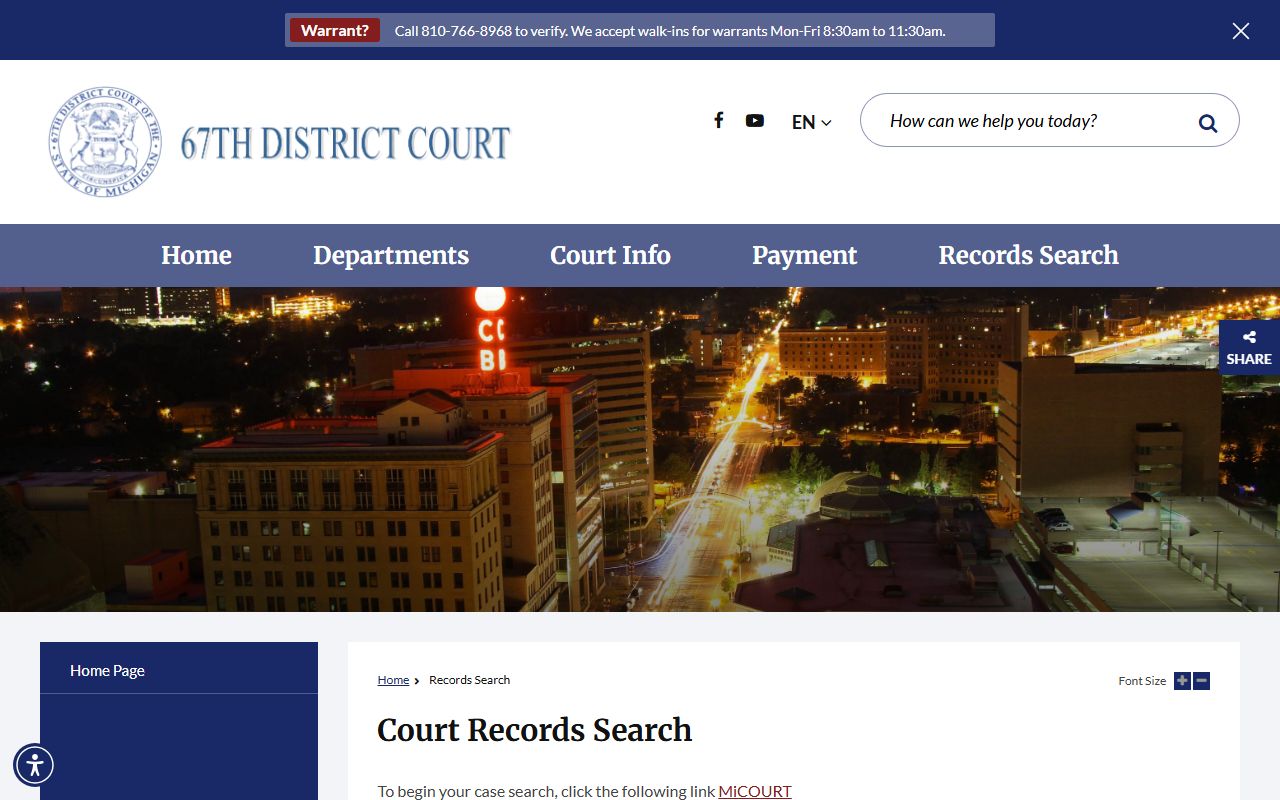
Older district files need a different path. The 67th District Court records search page explains that files before July 31, 2014 require a request by email, mail, or drop-off.
Paying or Contesting a Genesee County Traffic Ticket
You can pay a ticket or contest it, and the choice sets your next step. Paying a civil infraction admits responsibility and closes the case. Contesting it sets a hearing at the branch court that holds the file. Deadlines are printed on the citation, so act before the date passes.
At a hearing, a driver can seek an informal hearing before a judge or magistrate, or a formal hearing with the officer present. Missing a scheduled date can trigger a bench warrant and a license hold. Call the branch court first, since the 67th District Court asks callers to verify hours and warrant status before arriving.
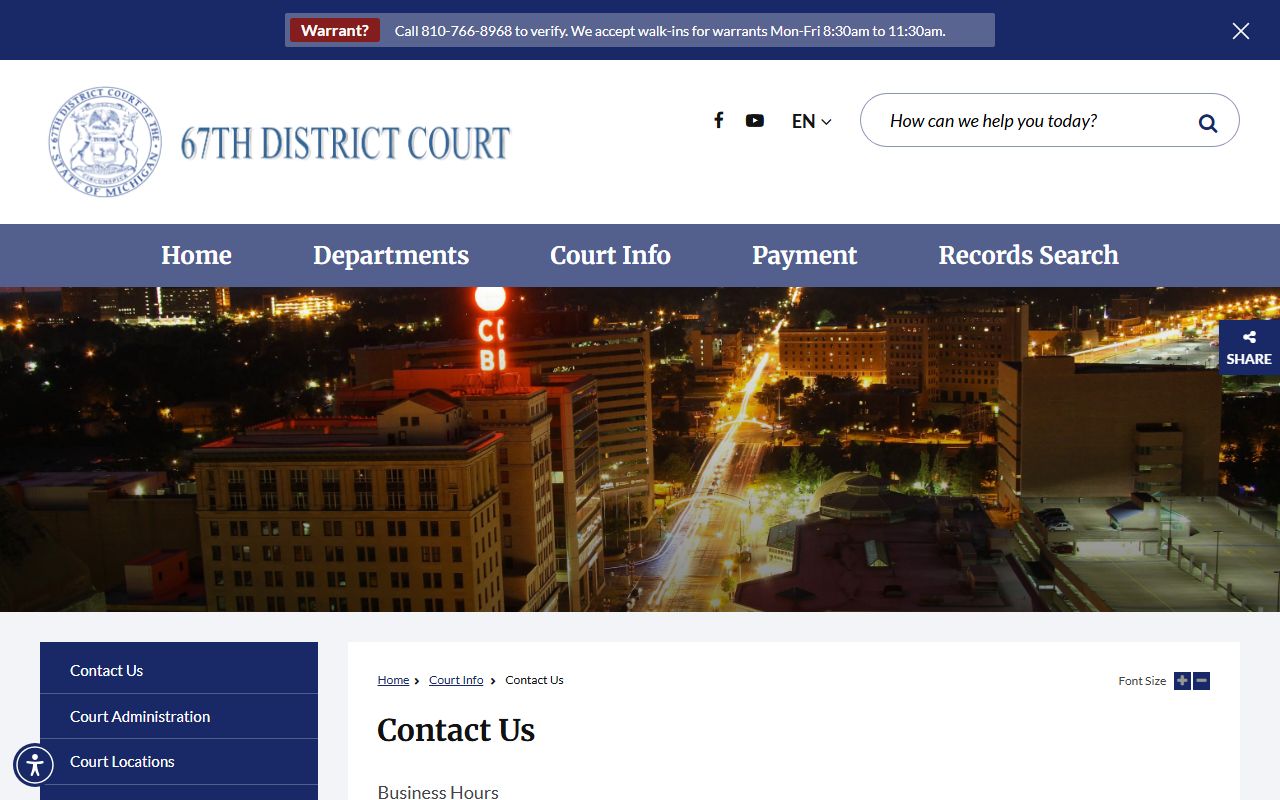
The court's contact page lists branch phone numbers and warrant window hours. Confirming your branch avoids a wasted trip across the county.
Public Access Laws for Traffic Court Records
Traffic case records are public under Michigan law, with limits set by court rule. The Michigan Freedom of Information Act sets the open-records policy for government records. Court files also follow a court rule that governs public access to case records.
Key Statutes:
Michigan Code § 15.231 - sets the state's public policy of open access to government records.
Michigan Court Rule 8.119(H) - governs public access to court case records and why not every document is posted online.
Court Traffic Records vs State Driver Records
This is the distinction that trips up the most people. The court traffic record is the case file at the 67th District Court. The state driver record is a separate history kept by the Michigan Secretary of State. They serve different purposes and live in different offices.
| Record Type | Source | What It Shows | How to Access |
|---|---|---|---|
| Court Traffic Record | 67th District Court | Case details, hearings, and disposition | MiCOURT or the branch records office |
| State Driver Record | Michigan Secretary of State | Conviction history, points, and license status | Michigan Secretary of State driver record request |
A court docket entry is not the same as your driving history. To fix a license issue or check points, you use the Secretary of State record, not the court file. To confirm a case outcome, you use the court record.
CDL and Commercial Driver Records
Commercial drivers face stricter rules on traffic cases. A commercial driver's license carries federal reporting duties, so a conviction can reach the driver's record even when a regular driver might avoid it. Many diversion options are not open to CDL holders for violations in a commercial vehicle.
Because the stakes are higher, CDL drivers often contest tickets that others would simply pay. The court file still runs through the 67th District Court, but the effect on a commercial record can be far greater. A driver with a CDL should weigh a hearing before paying any citation.
OWI Cases and Genesee County Sobriety Court
Drunk-driving cases route to the criminal side, not the traffic docket. Operating while intoxicated is a criminal charge, so its record and process match a criminal case. For the full case file, hearings, and sentencing, the county criminal court records path covers it.
The 67th District Court also runs a sobriety court for eligible alcohol-dependent participants. The program spans four phases over 24 months, with graduation set at 90 days of sobriety. Judge Jessica J. Hammon presides. The program fee is $300, with probation oversight billed at $35 per month for a total of $840 over the two years.
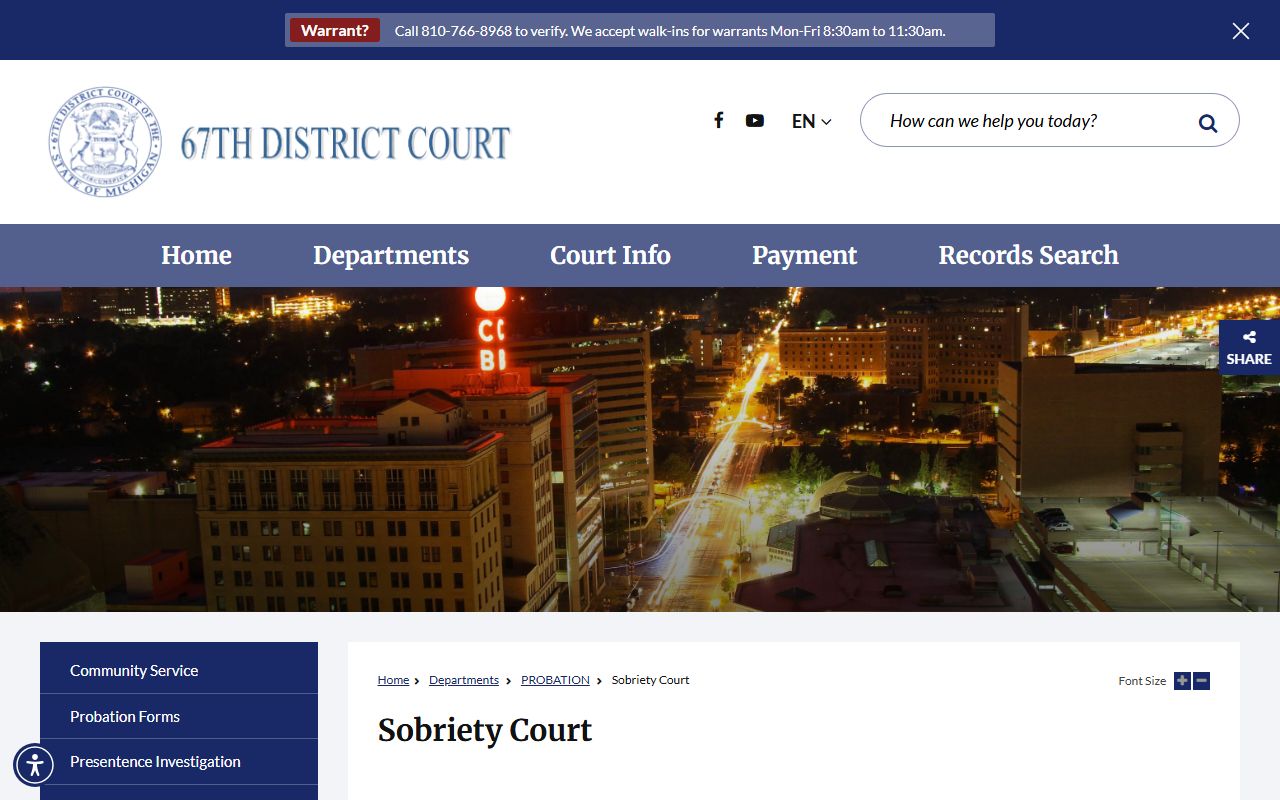
Eligibility turns on an alcohol use disorder, a high-risk profile, a qualifying record, and county residency, plus a screening interview. The court's sobriety court page lists the phases, fees, and contacts.
Traffic Enforcement in Genesee County
Traffic cases begin with a stop by a local police agency or the county sheriff. The Genesee County Sheriff's Office patrols county roads and runs specialized units. One is GHOST, the sheriff's anti-trafficking team, which works interdiction that can begin at a routine traffic stop.

The agency that writes a ticket sets which branch court hears it. Sheriff cases and city police cases both feed the same 67th District Court system, so the search and payment paths stay the same for the driver.
Sealing or Setting Aside Traffic Records
Most civil infraction tickets are not criminal, so they are not eligible for expungement in the way a conviction is. Misdemeanor traffic offenses can be different. A criminal traffic conviction may qualify for a set-aside under Michigan's expungement law, subject to eligibility and a court decision.
A set-aside petition is filed in the circuit court, and a judge weighs the request. The county criminal court records path explains the set-aside process and which convictions can qualify. A civil ticket, by contrast, simply ages on the driving record under state rules.
Getting Copies of Genesee County Traffic Records
Copies of a traffic case come from the branch court that holds the file. The 67th District Court records office sets the copy and certification charges and processes older-file requests. Bring or note the case number to speed the request.
The court file and the state driving record are ordered separately. A certified case copy comes from the district court, while a certified driving record comes from the Michigan Secretary of State. Keeping those two requests apart avoids paying the wrong office for the wrong record.