
What Probate Covers in Genesee County
Probate is the court process for a person's estate and for legal protection of those who cannot manage their own affairs. Genesee County Probate Court hears deceased estates, wills, and trusts. It also handles guardianships, conservatorships, protective proceedings, and mental-health petitions. That mix makes it one of the busiest record desks in the county.
The court has served Genesee County since 1836, and it sits on the fifth floor of the historic Genesee County Courthouse in downtown Flint. It is a distinct court from the 7th Circuit Court and the 67th District Court, with its own judges and its own filings. The court's Probate Court home page lays out its jurisdiction in one place.
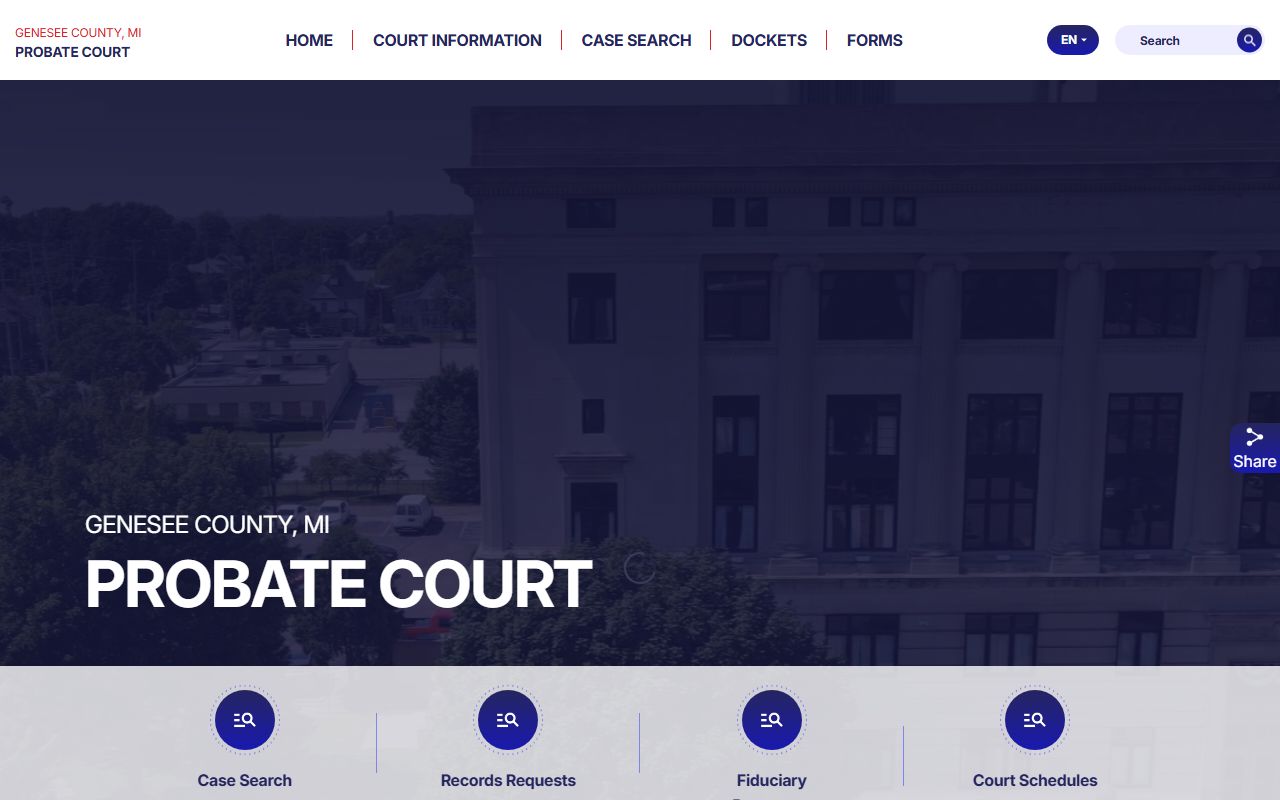
Because probate stands apart, a matter that belongs here rarely appears in the criminal or civil dockets. Sending a request to the right court from the start saves days of waiting.
Genesee County Probate Terms Defined
Probate filings lean on a set of legal terms. A quick guide makes the record and the request process easier to follow. These are the words you will see most often on a Genesee County probate file.
- Testator
- The person who made the will.
- Executor
- The person named in a will to carry out its terms.
- Intestate
- Dying without a valid will, so state law directs the estate.
- Guardianship
- Court authority over the personal care of a minor or an incapacitated adult.
- Conservatorship
- Court authority over the finances and property of a protected person.
How to Search Genesee County Probate Records
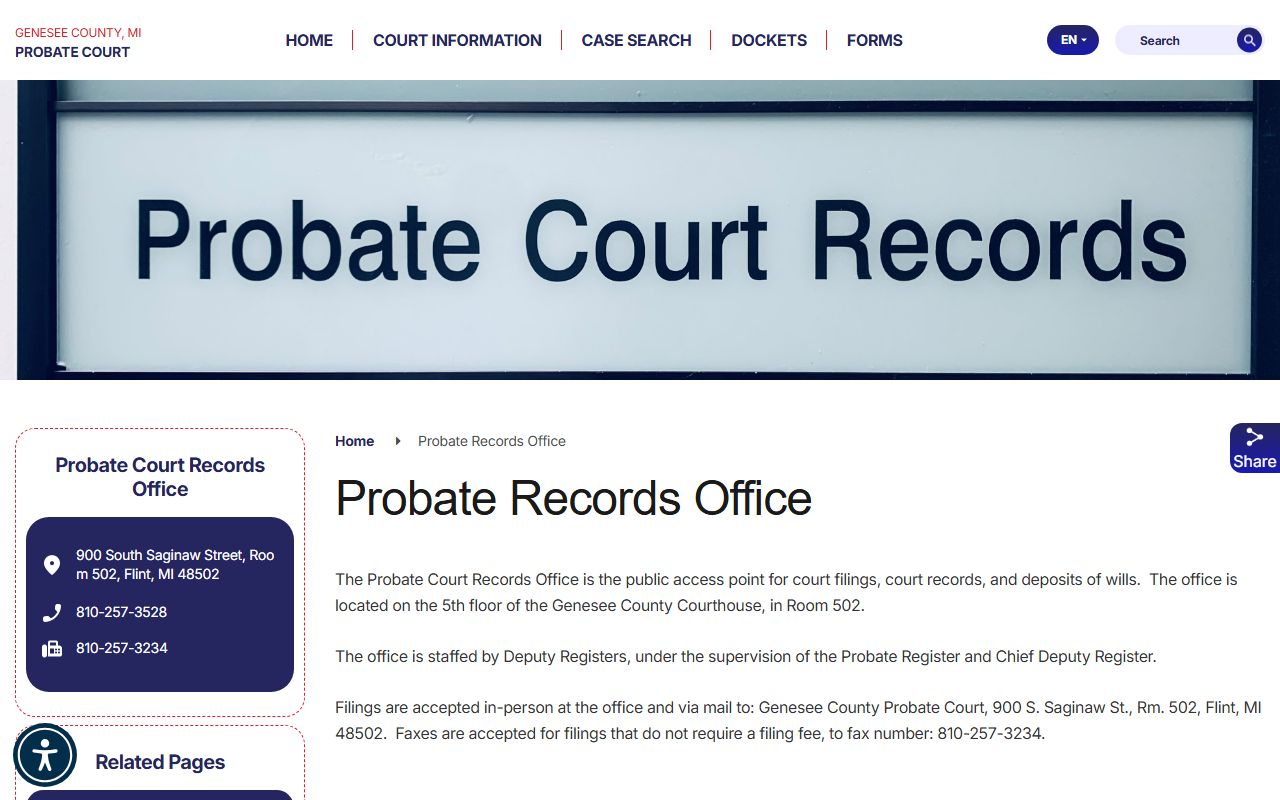
Probate records are handled by a dedicated records office, not the county clerk. The office indexes cases and takes copy requests. Some files are available on request even when the case is already indexed.
The Probate Records Office page is the starting point for most searches. A few steps move you from a name to a copy.
- Open the Probate Records Office page and confirm the record you need.
- Gather the court file name and file number, or the party's full name.
- Submit the online records request form with your details and request.
- Pay the copy or search fee, and use the transcript line for testimony.
For matters that overlap with a broader case, the county court records path explains the statewide MiCOURT search, which lists probate as one of its case categories.
Genesee County Probate Court Office
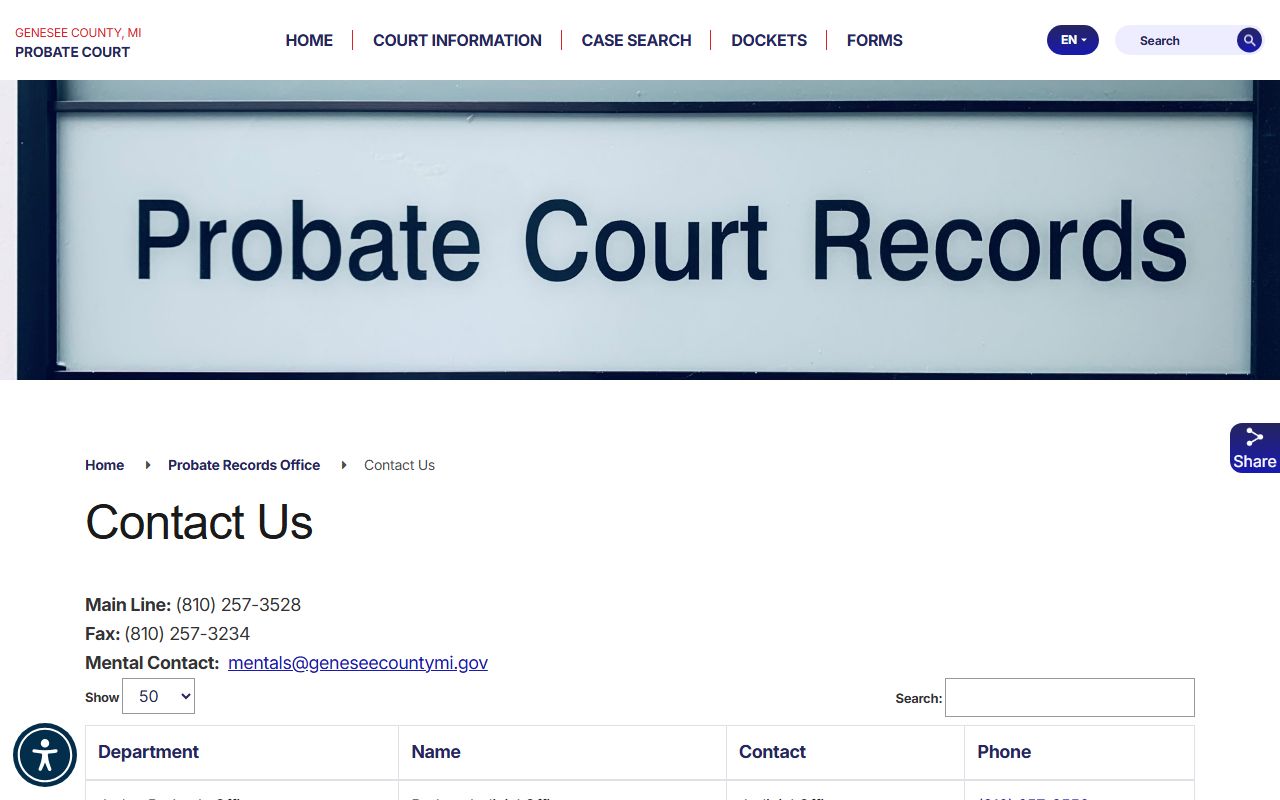
The court and its records office share the historic courthouse in downtown Flint. A separate contact page handles records questions. The contact card below has the office address, phone, and hours for probate requests.
Genesee County Probate Court
900 South Saginaw Street, Room 502
Flint, MI 48502
810-257-3528
Monday to Friday, 8:00am to 4:00pm
Transcript requests are separate from ordinary copies. They go through the court recorder transcript line at 810.424.4454, which matters for lawyers and families who need testimony rather than the file.
Probate Records Request Form Fields
The records office uses a public web form for requests. It asks for who you are and which file you need. The table below lists the fields on the form so you can prepare before you start.
| Field | Required | Notes |
|---|---|---|
| Your First Name | Yes | Identifies the requester. |
| Your Last Name | Yes | Identifies the requester. |
| Your Email | Yes | Used for the office response. |
| Court File Name or Number | Yes | Points staff to the exact file. |
| Request Details | Yes | Describes the record and copies needed. |
| reCAPTCHA | Yes | A human check on the public form. |
The court's records request form handles estate and guardianship files. Giving both the file number and clear details speeds the reply.
Genesee County Probate Court Fees
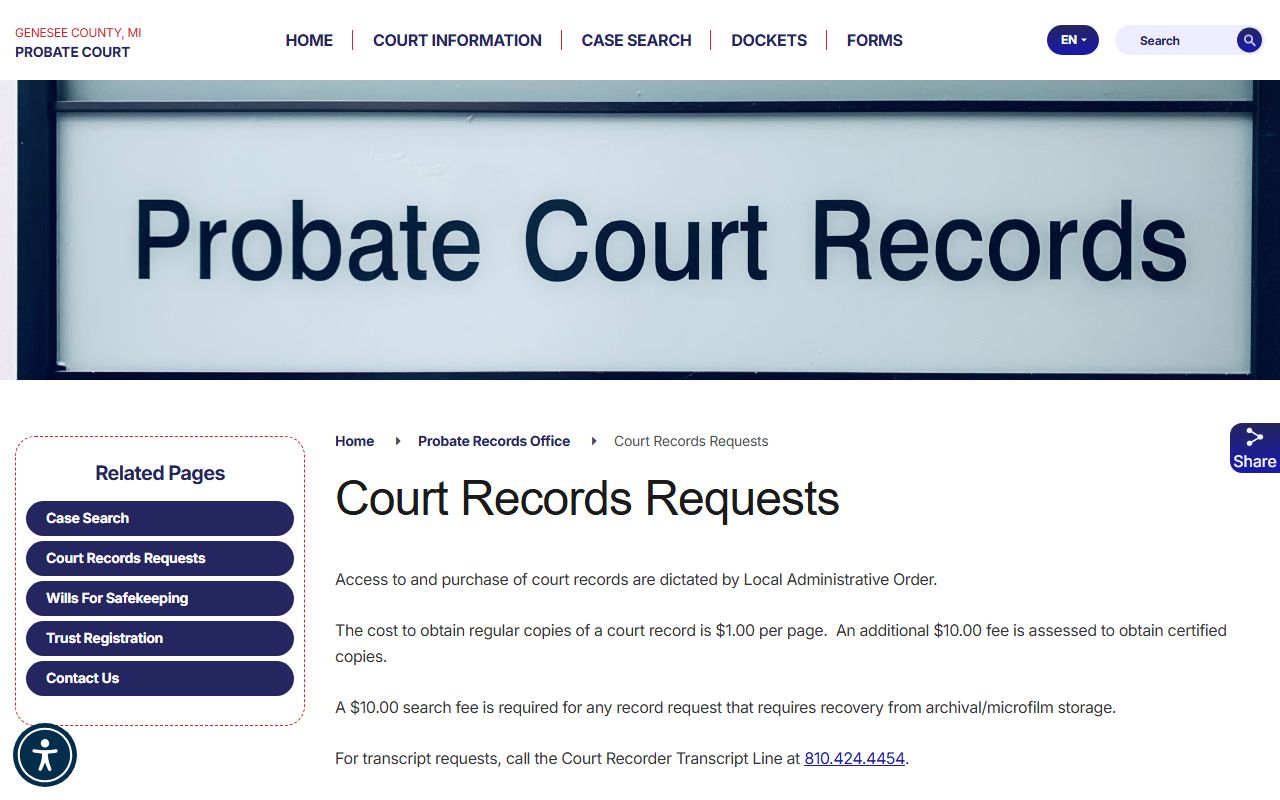
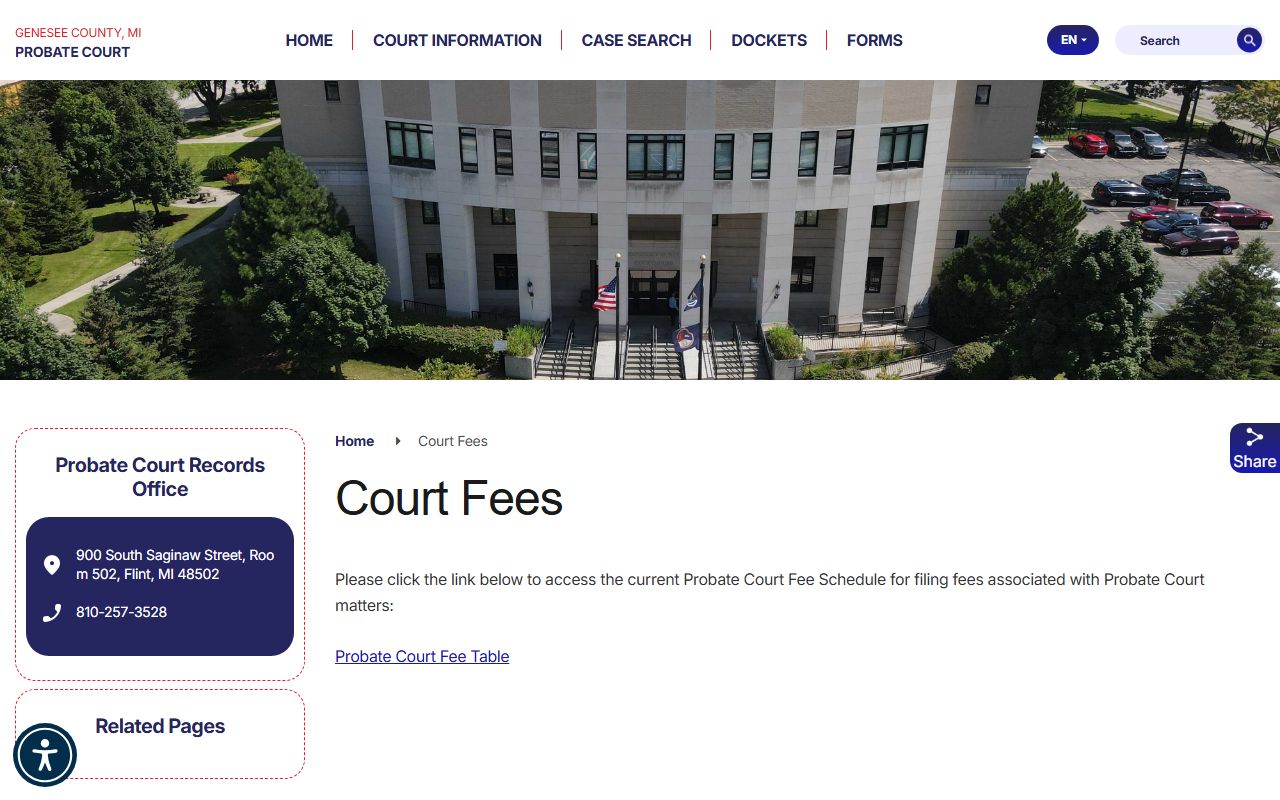
Copy and search fees are set and posted by the court. They stay modest for most requests. The table below covers the common charges.
| Item | Amount |
|---|---|
| Regular copies, per page | $1.00 |
| Certified copy, added charge | $10.00 |
| Archival or microfilm search | $10.00 |
| Will deposited for safekeeping | $25.00 |
The court posts its full schedule on the probate court fees page. Transcript charges are handled separately through the court recorder line.
Wills for Safekeeping in Genesee County
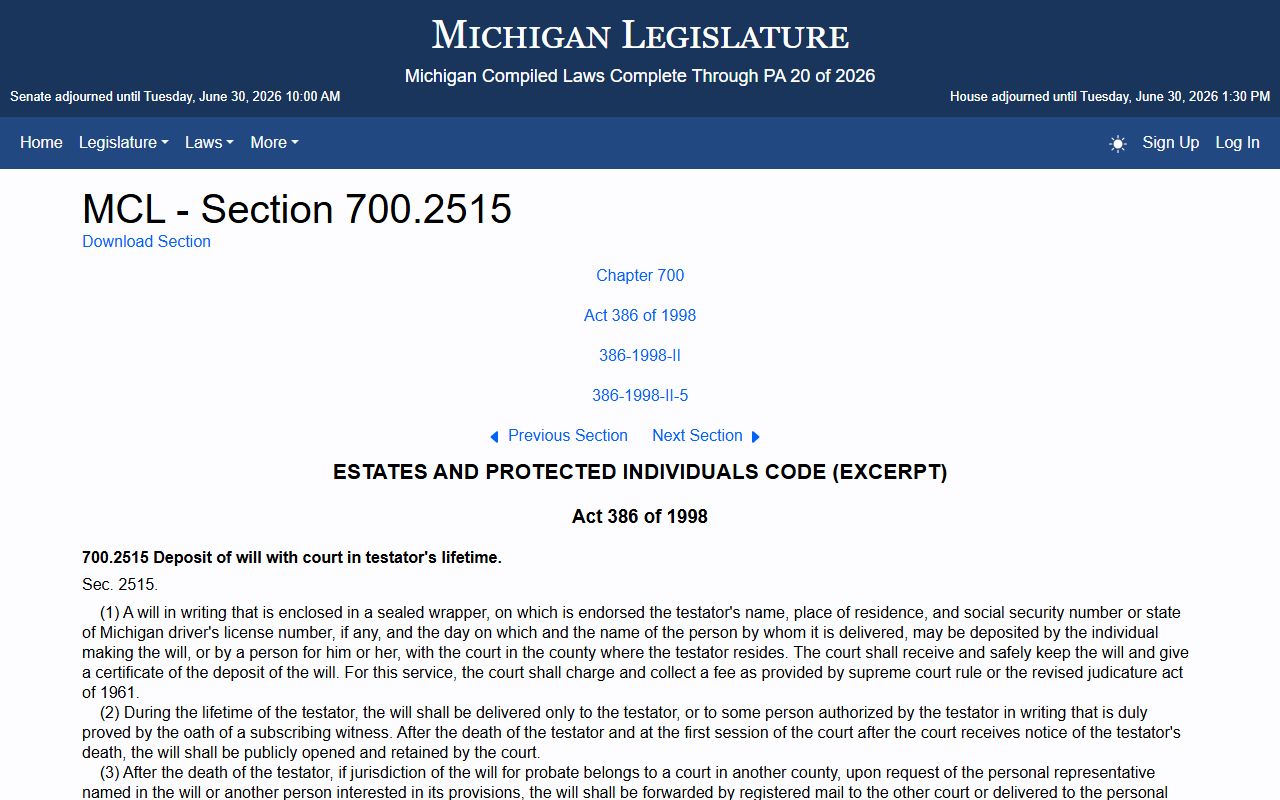
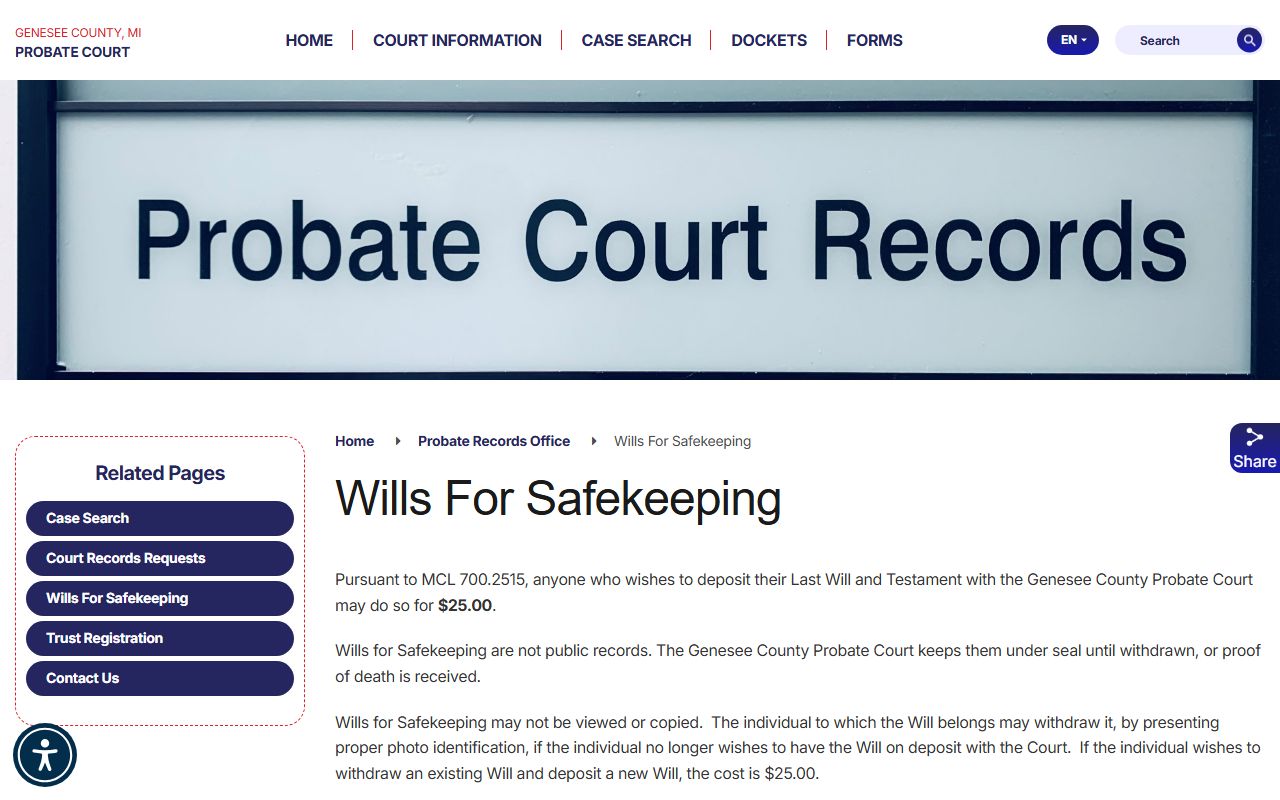
The court accepts a will for safekeeping while the maker is still alive. Anyone may deposit a will for a set fee. The point is to keep the document secure until it is needed.
A safekeeping will is not a public record. It is sealed and cannot be viewed or copied while the maker lives. The deposit is allowed under state statute, which you can read on the Michigan will safekeeping statute page.
The seal lifts only when the will is withdrawn or the maker's death is proven. If the maker withdraws it and deposits a new will, the fee applies again. The court's wills for safekeeping page explains the deposit and withdrawal rules.
What Genesee County Probate Records Show
An open probate file holds the paper trail of an estate or a protective case. That can include the will, the inventory of assets, and the accountings filed by the executor. Guardianship and conservatorship files hold the orders that grant and limit authority.
A file often includes the letters that name a personal representative, the record of debts and claims, and the final distribution to heirs. Together those documents show how an estate opened, how it was managed, and how it closed.
Public viewers may still need a formal request even when a case is indexed. The record confirms who is in charge of an estate and how it is being handled. For marriage or death certificates tied to an estate, the county marriage and divorce records path points to the clerk's vital records instead.
Estates, Trusts, and Guardianships in Genesee County
Probate hears several kinds of matters, and each opens its own file. Deceased estates are the most common. When a person dies, the estate is administered through the court, whether or not a valid will exists. A will is admitted, or the estate is handled as intestate under state law.
Guardianships and conservatorships protect people who cannot manage on their own. A guardianship covers the personal care of a minor or an incapacitated adult. A conservatorship covers that person's money and property. Both create ongoing files with orders that grant and limit authority.
Trusts, protective proceedings, and mental-health petitions round out the docket. Because these matters range from routine estates to sensitive health cases, the court sorts them carefully. That mix is why probate keeps a separate records office rather than folding into the county clerk desk.
Common Genesee County Probate Questions
A few questions come up often for families dealing with an estate. The answers below point to the right office and the right process.
Where is the Genesee County Probate Court?
The court sits on the fifth floor of the historic Genesee County Courthouse at 900 South Saginaw Street, Room 502, in Flint. Its main line is 810-257-3528. It has served the county since 1836.
How do I get a copy of a probate file?
Use the Probate Records Office request form with the court file name or number and your request details. Regular copies are $1.00 per page, with a $10.00 charge added for certification. Transcripts go through the court recorder line at 810.424.4454.
Can anyone read a will held for safekeeping?
No. A safekeeping will is sealed under state statute and cannot be viewed or copied while the maker is alive. The seal lifts only on withdrawal or proof of death.
Restricted Genesee County Probate Records
Not every probate matter is open. Mental-health proceedings follow strict confidentiality rules. Guardianship files that involve minors can be limited. A will held for safekeeping stays sealed until death or withdrawal.
The safest rule is that probate access blends court rule, statute, and office practice. When a file is closed to the public, staff can explain whether a subject, heir, or attorney may still see it. That keeps sensitive family and medical details protected while the estate work goes on.