
Criminal Court Records in Genesee County
A criminal court record is the case file a court builds once the state charges a person with a crime. The clerk opens the file, then adds to it at every step. It holds the charges as filed, each court date, the rulings, and the way the case ends. In Genesee County, the trial court that handles the case keeps this file. Staff in the court's criminal or legal division log each entry as the matter moves along. The record works as the official memory of what the court did, and it stands apart from a police report or a jail booking sheet.
Two trial courts share the criminal workload here. The 7th Circuit Court hears felonies, the more serious crimes that can bring a prison term. The 67th District Court handles misdemeanors, along with traffic, small claims, and the early steps of felony cases. A felony often starts in district court for the first appearance and the preliminary exam, then moves up to circuit court. Because of that split, one person's history can sit in two court files at once. The broader set of Genesee County court records ties both levels together.
How to Search Genesee County Criminal Court Records
Genesee County criminal cases are searched mainly through MiCOURT, the state's public case-search tool. It lets a user look up a case by the defendant's name or by the case number. Filters then narrow the results by court, case type, case year, status, and key dates such as filing, offense, or disposition. Name searches match the start of a participant's name, while case-number searches match part of the number.
- Open the MiCOURT public case-search page in a browser.
- Enter the defendant's last and first name, or type a known case number.
- Narrow the list by court, case type category such as criminal, case year, and date range.
- Open the matching case to read the docket, the charges, and the disposition.
- Ask the court's records office for a certified copy when an official document is needed.
Not every file is online. The 7th Circuit Court keeps a public circuit court records page for indexes and registers of action, and the 67th District Court records search routes users into MiCOURT while noting that files before mid-2014 must be requested by email, mail, or drop-off. For a person sent to state prison or placed on parole, the Michigan Department of Corrections OTIS tool adds the custody and sentence side that the court docket alone does not show.
Stages of a Genesee County Criminal Case
A Genesee County criminal case moves through a set order, and the record grows at each stop. The file starts when charges are filed, then it fills with hearing dates, motions, and rulings. Reading the docket in order shows exactly where a case stands. Some cases end fast with a plea. Others run for months through pretrial work and trial.
Case flow: Charges Filed › Arraignment › Pretrial / Motions › Plea or Trial › Disposition › Sentencing
| Stage | What Happens |
|---|---|
| Arraignment | The defendant hears the charges, learns the rights that apply, and enters a first plea. The court sets bond and release terms here. |
| Pretrial / Motions | Both sides trade information, file motions, and try to settle. Felonies also clear a preliminary exam in district court before trial. |
| Plea or Trial | The case ends with a plea deal or goes to a jury or bench trial where a verdict is reached. |
| Sentencing | After a guilty finding, the judge imposes jail, prison, probation, fines, or restitution, and the terms enter the record. |
The Prosecutor's Role in Genesee County Criminal Cases
Charges do not appear in a court file on their own. The Office of the Genesee County Prosecuting Attorney, led by David S. Leyton, reviews police work and decides what to file. That choice drives the whole case, from the first count listed to the plea offered later. The office is split into divisions so that felony work, warrant work, appeals, and victim services each have a home.
The prosecutor's main page lays out how the office is organized and where to find staff.
A look at the Genesee County Prosecuting Attorney page shows the office's public role in criminal cases.
That home page frames every criminal record on file, because the office is the party that brings each charge forward.
The divisions list is where the case pipeline becomes clear. The Pre-Trial/Warrant Division in district court authorizes arrest warrants, runs pretrials for felony and misdemeanor cases, handles felony preliminary exams, and takes misdemeanor jury trials. The Felony Trial Division works cases up in circuit court. The prosecutor divisions and staff page maps each of these units.
Knowing which division handles a case tells a reader why a felony file and a misdemeanor file follow different paths through the Genesee County courts.
Defense and the Genesee County Public Defender
Every criminal record has two sides, and the defense side matters just as much as the charge. The Genesee County Office of the Public Defender represents adults who face charges but cannot pay for a lawyer. It was the county's first such office, and Nathaniel C. Perry III serves as chief public defender after the Board of Commissioners appointed him in 2021. The office reaches by phone at 810.257.3800.
The office runs on a hybrid model. Staff attorneys handle many cases, while a felony roster of private lawyers and a separate misdemeanor and arraignment roster fill the gaps in district court.
The Genesee County Office of the Public Defender page describes the office and the right to counsel it protects.
Because appointed counsel appears on the docket, the public defender's role often shows up right inside the criminal record itself.
Staff assignments and direct lines sit on the office's own listing.
The public defender staff and contact page lists the attorneys and support team.
Those names help a reader match an attorney abbreviation on a docket line to a real person in the office.
People with questions for the office can reach it through a short web form.
The public defender contact page collects a name, email, phone, and a preferred way to reply.
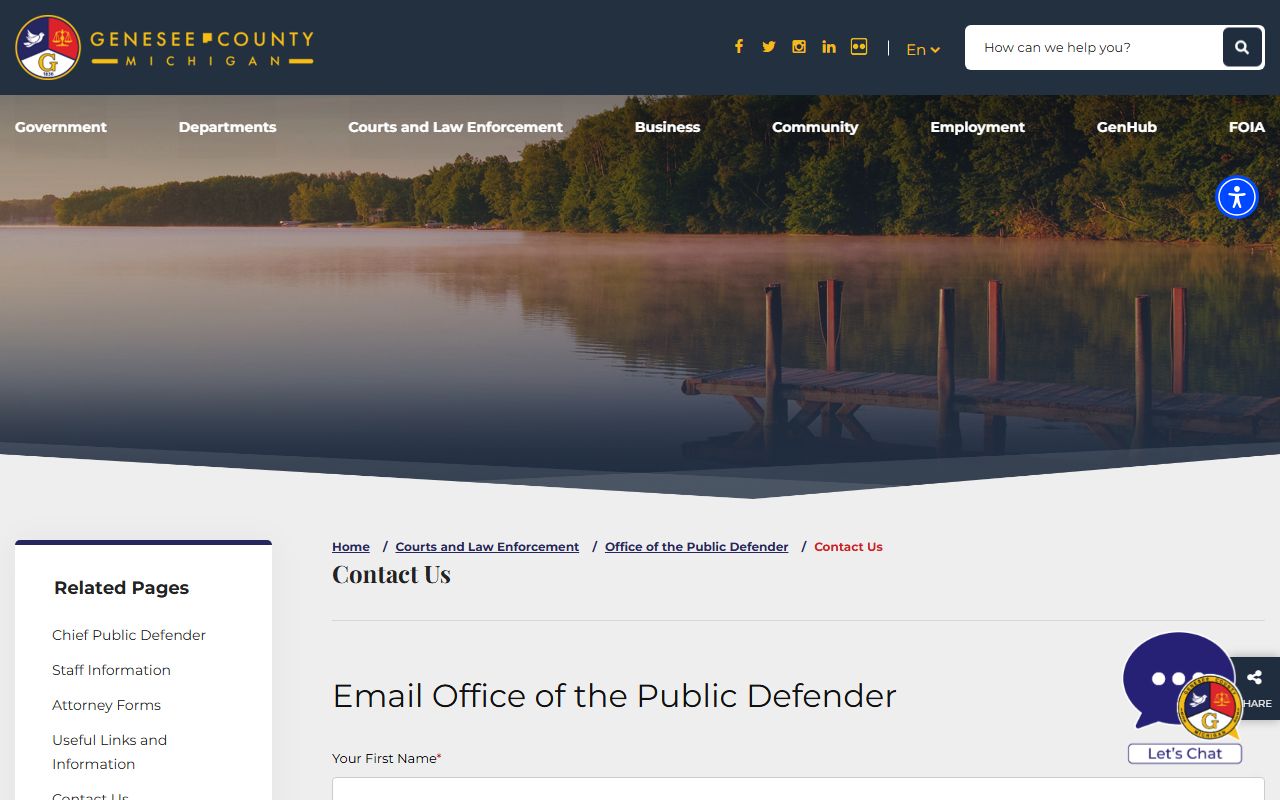
That form is a starting point for a defendant who needs to ask about representation in a pending Genesee County criminal case.
What a Genesee County Criminal Court Record Shows
A Genesee County criminal case file is built from a set of standard fields. The public MiCOURT displays for the county show party name, time, hearing info, case number, and a court tracking number. Open the full case and each field ties back to a step in the case. The layout stays the same whether the case is a felony in circuit court or a misdemeanor in district court.
| Field | What It Shows |
|---|---|
| Case Number | The unique docket ID for the case, often with a year prefix and a type suffix that flags the case category. |
| Defendant | The name of the person charged, listed as a party on the case with a role code. |
| Charges | The offenses filed by the prosecutor, each with a statute cite and a severity level. |
| Plea | The response entered by the defendant, such as guilty, not guilty, or no contest. |
| Disposition | The outcome of each charge, whether that is a conviction, a dismissal, or an acquittal. |
| Sentence | The penalty set by the judge, from jail or prison time to probation, fines, and restitution. |
For a closer look at the charges themselves and how they change over time, the Genesee County arrest records and court charges page breaks down the charging documents in more depth.
Reading Dispositions and Sentences
The disposition is the line that tells a reader how a charge ended. One case can carry several dispositions when it holds more than one count. A charge may end in a conviction, a dismissal, or a not-guilty verdict, and each result reads differently on a Genesee County background check. The sentence follows a conviction and spells out the penalty.
- Guilty
- The defendant admitted the charge or a jury found it proven, which creates a conviction.
- Not guilty
- A verdict of acquittal, meaning the charge did not lead to a conviction.
- Dismissed
- The charge was dropped by the court or the prosecutor without a conviction.
- No contest
- The defendant did not fight the charge, which still results in a conviction for most purposes.
- Deferred
- Judgment is held back under conditions, and the case may be dismissed if those terms are met.
A sentence entry can stack several parts at once. Jail or prison time, probation, fines, court costs, and restitution to a victim may all appear on the same line. Reading them together shows the full weight of the outcome.
Charges vs. Convictions
Being charged is not the same as being convicted. A charge is an accusation the state must still prove. A conviction is the finding that the proof was met. A Genesee County criminal court record can list charges that were later dropped, dismissed, or ended in acquittal, and those entries stay in the file even when there was no guilty result. Reading the disposition next to each charge keeps the two from getting mixed up.
| Charge | Conviction | |
|---|---|---|
| Stage | Accusation | Verdict or plea |
| Burden of Proof | Probable cause | Beyond reasonable doubt |
| Public Record | Yes | Yes |
Federal Criminal Cases from Genesee County
Not every serious crime lands in state court. For federal purposes, Genesee County sits in the Eastern District of Michigan, so drug, gun, and fraud cases brought by federal agents are prosecuted there. The U.S. Attorney's Office handles that work and keeps a branch office in Flint. Those files are separate from the county docket and are reached through the federal PACER system rather than MiCOURT.
The federal prosecutor's site lays out its districts and its role.
The U.S. Attorney's Office for the Eastern District of Michigan page covers the office that files federal charges against local defendants.
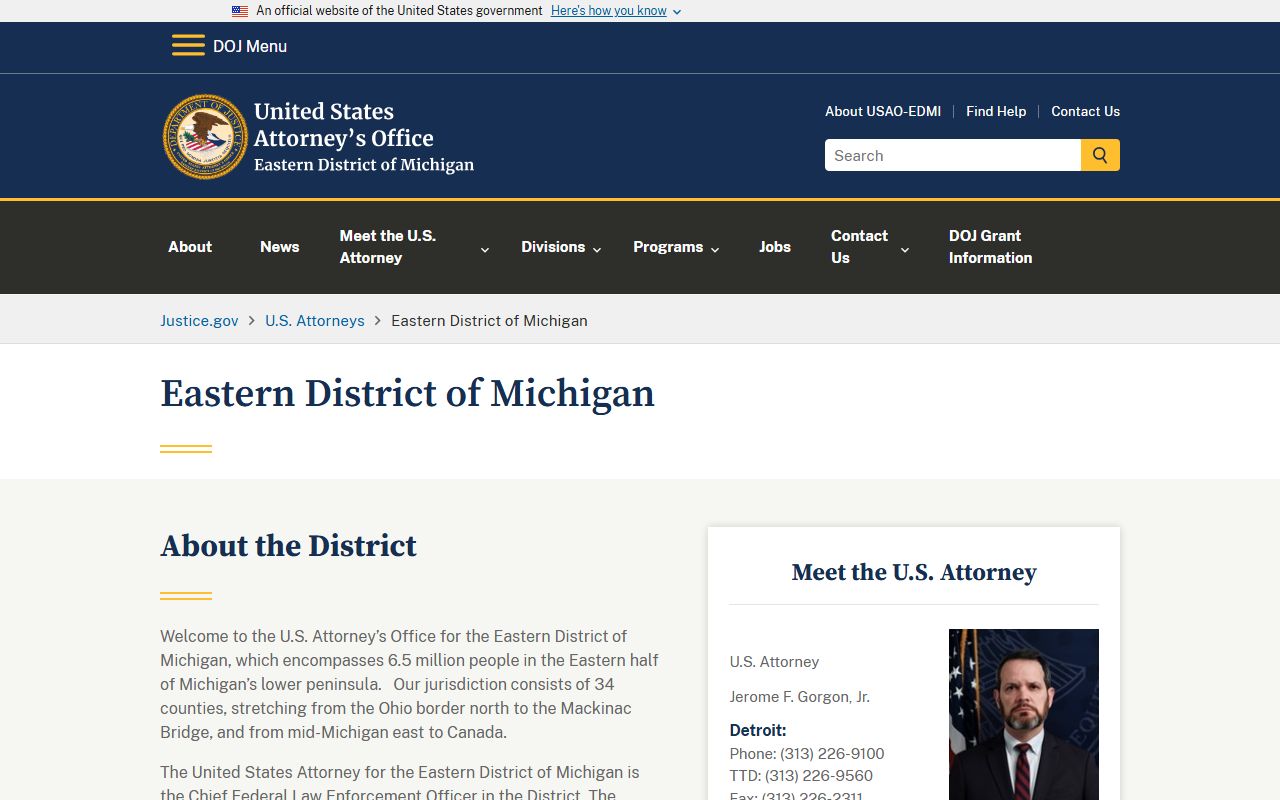
A reader who cannot find a case in MiCOURT should consider whether the matter was charged as a federal crime instead.
Direct contact details, including the Flint branch, sit on the office's contact page.
The Eastern District contact page gives the addresses and phone lines for federal criminal questions.
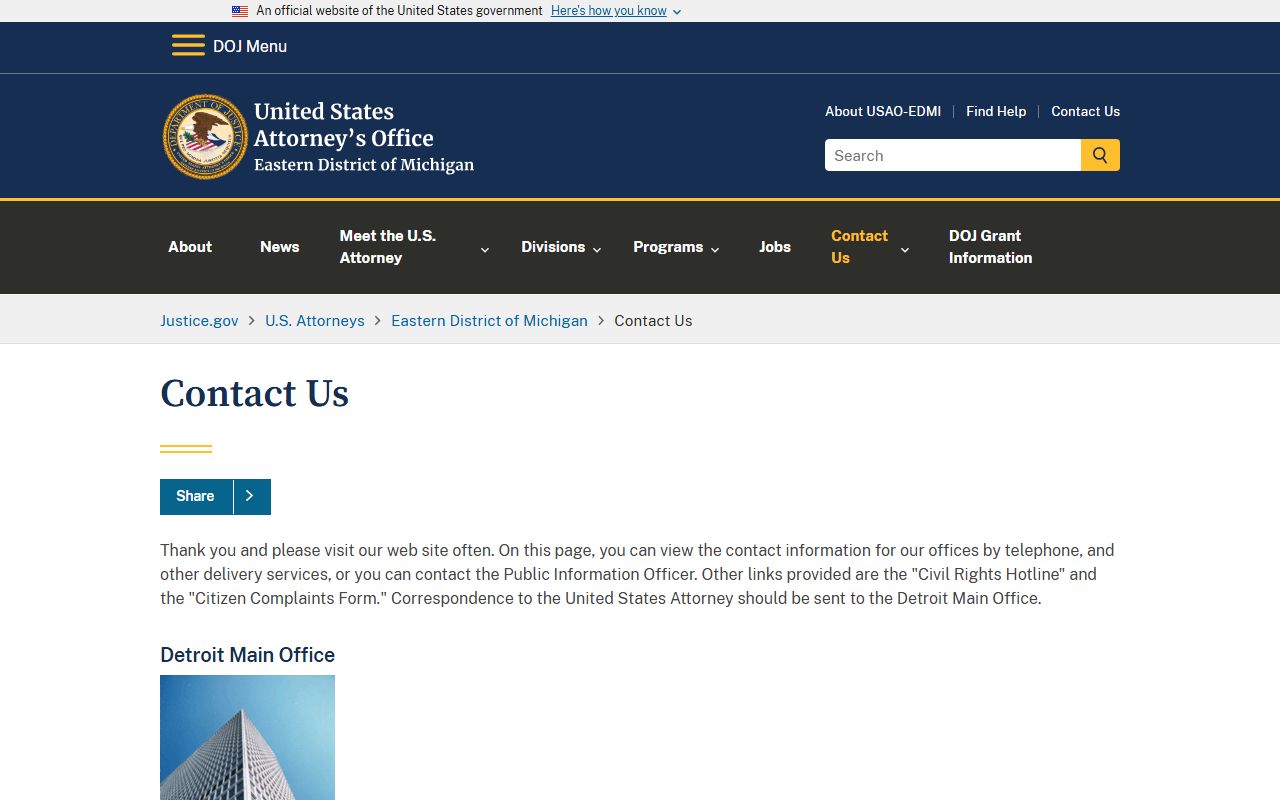
Pairing that office with the state courts gives a full picture of where a Genesee County criminal record might live.
Public Access to Genesee County Criminal Records
Most criminal case files in Genesee County are open records. Michigan law sets the baseline for that access, and court rules decide how much of a file goes online. A reader can view a docket at the court, request older files from a records office, or file a formal request when a record is not posted. The court still shields juvenile, sealed, and expunged matters even when the case itself shows up in a search.
Key Statutes:
Michigan Code § 15.231 - Sets the state's public policy that government records should be open to the people.
Michigan Code § 15.243 - Lists the categories of records that a public body may withhold from disclosure.
Sealed vs. Expunged Records
Sealing and expungement both limit who can see a criminal record, but they are not the same thing. A sealed record still exists, yet it drops out of ordinary public view. An expunged, or set-aside, record is treated as if the conviction never happened for most purposes. In Michigan, the set-aside route is the main way a person clears an eligible conviction, and it flows through the Genesee County circuit court.
| Sealed | Expunged | |
|---|---|---|
| Visibility | Hidden from public | Set aside and removed from public search |
| Law Enforcement | Limited access | Very limited, kept for narrow legal use |
| Eligibility | By court order or statute, such as juvenile or dismissed matters | Eligible convictions under Michigan's set-aside statutes |
Expungement and Set-Aside in Genesee County
Michigan's set-aside law gives many Genesee County residents a path to clear an old conviction. The request is filed in the circuit court, notice goes to the prosecutor and other required agencies, and a judge weighs the eligibility rules against the public interest. If the court grants relief, the record leaves normal public search, though a limited history may remain for law-enforcement and court use.
- Check whether the conviction or record type is eligible under the set-aside statutes.
- File the petition in the circuit court where the case was handled.
- Serve notice on the prosecutor and any other required agency.
- Attend the hearing where a judge decides whether relief is proper.
- If granted, the record is set aside and removed from ordinary public view.
The core of the process rests on one statute that most petitions cite.
The main Michigan set-aside statute (MCL 780.621) lays out who may apply and how a court sets aside a conviction.
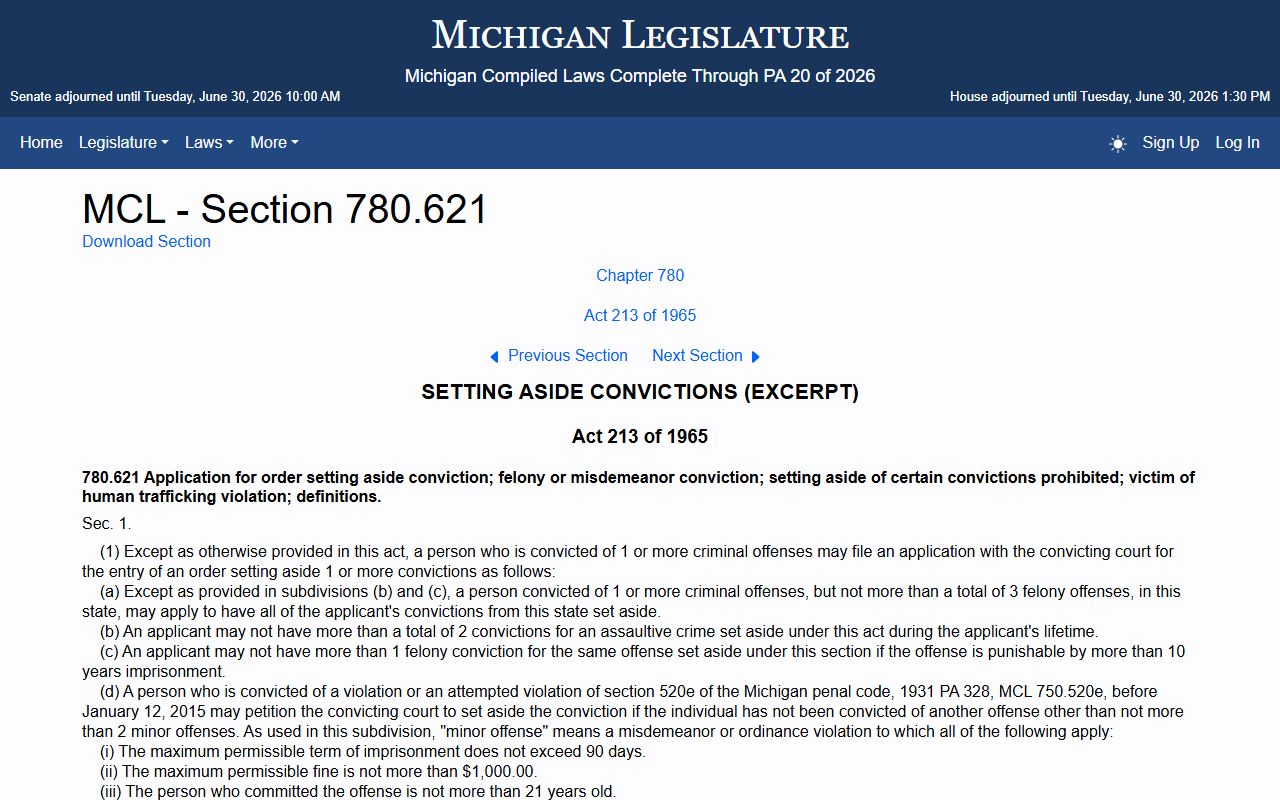
That section is the backbone of nearly every Genesee County expungement filed in circuit court.
Later sections in the same series fill in special rules.
A related provision, MCL 780.621c, addresses how certain grouped offenses count when a person seeks relief.
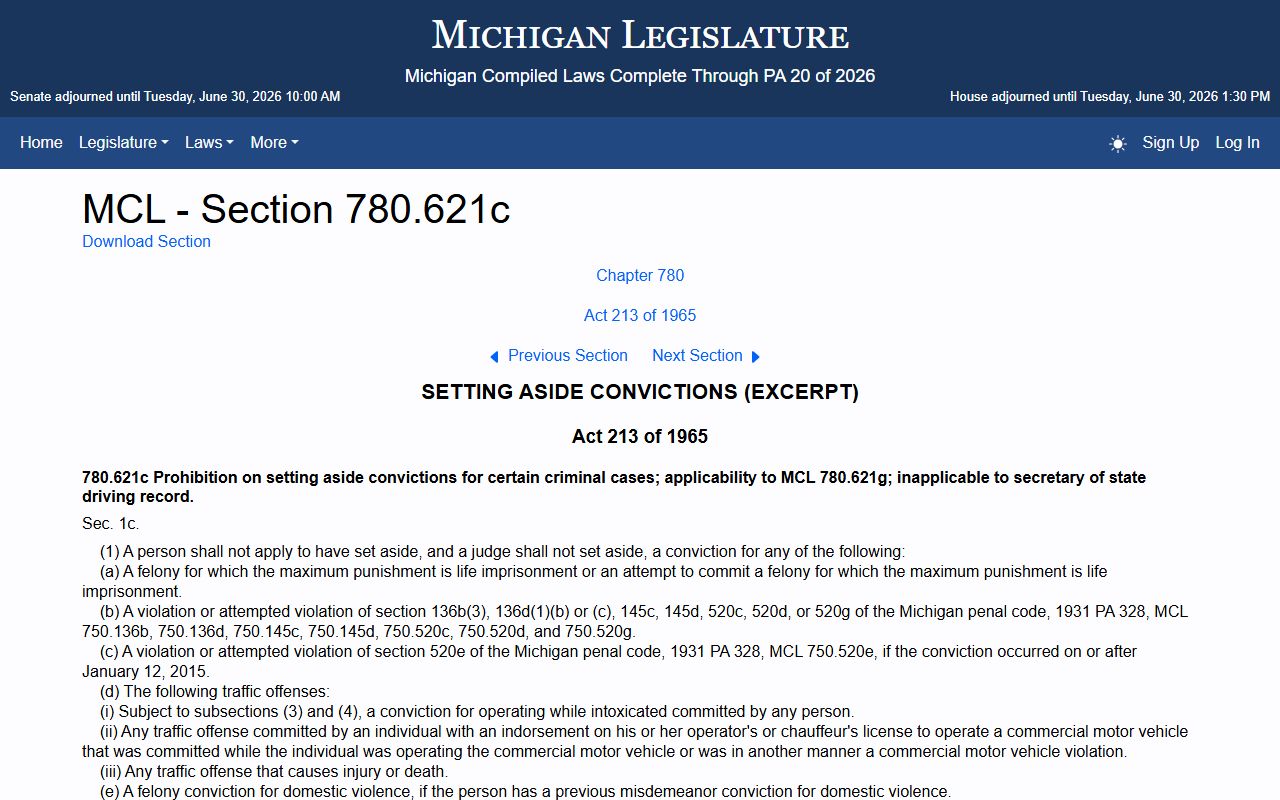
Rules like these decide how many past convictions a single petition can reach.
Other parts of the series speak to timing and automatic relief.
The provision at MCL 780.621d sets out waiting periods that a person must clear before applying.
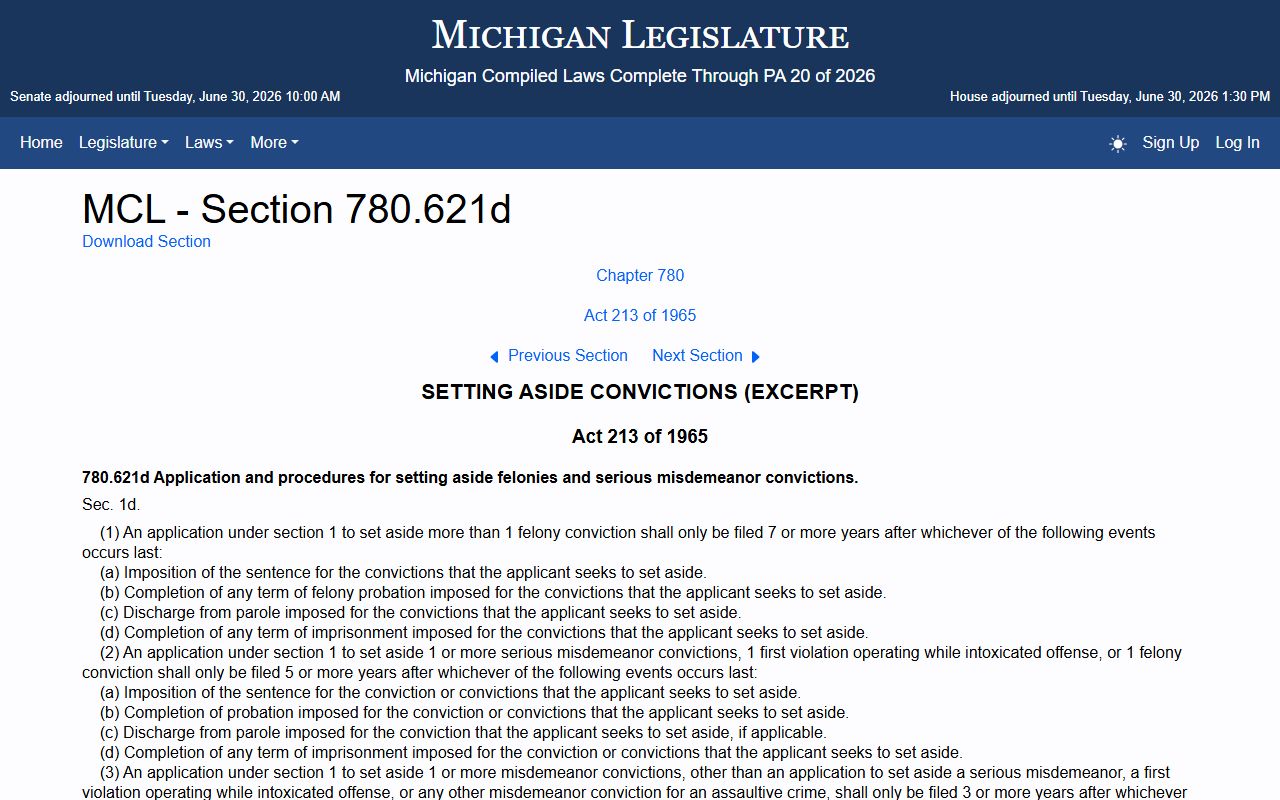
Those windows explain why some records can be cleared soon while others must wait years.
The final piece covers the newer automatic track.
The section at MCL 780.621g deals with set-asides that happen without a separate application.
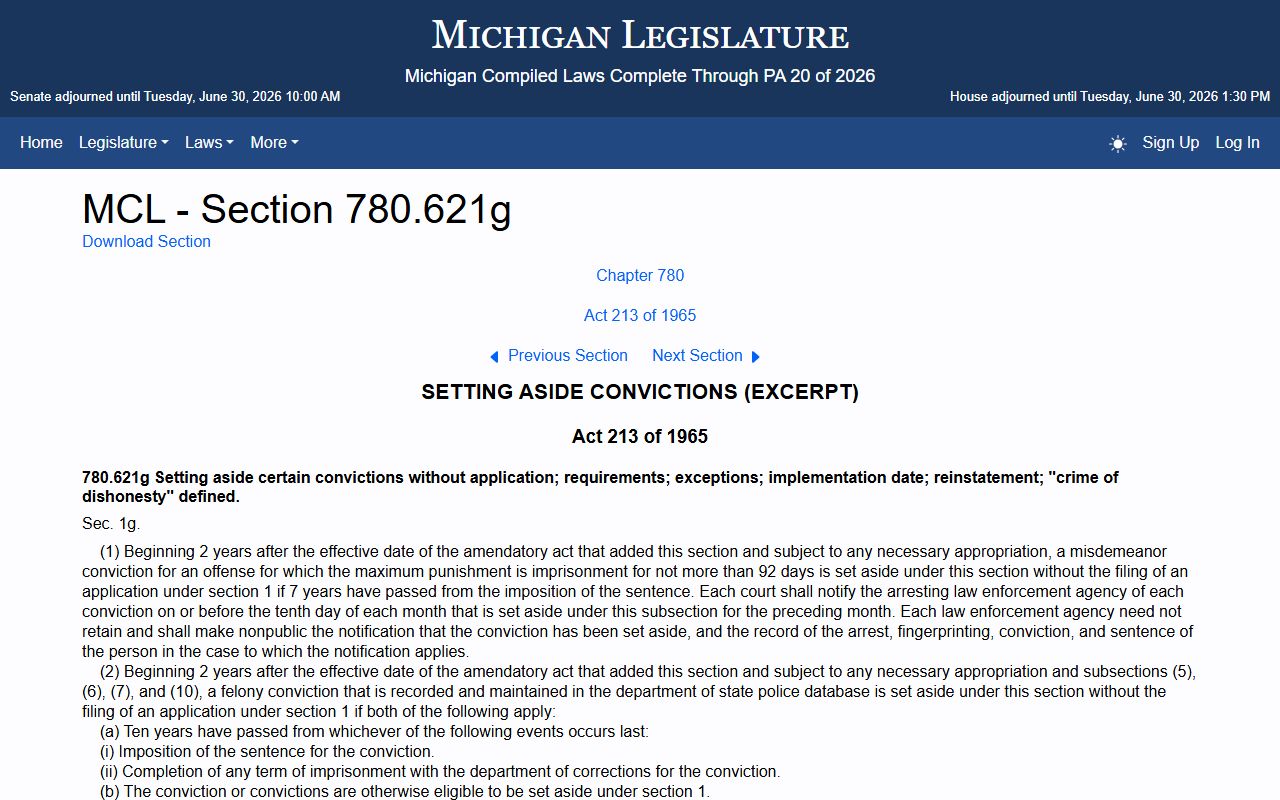
Under that track, some eligible records fall off public view on their own once the conditions are met.
Restricted Genesee County Criminal Court Records
Some Genesee County criminal matters are closed off from public search by law. Juvenile cases lead that list, since they are held apart from adult files. Sealed cases, adoption matters, and mental-health proceedings are also shielded. Even in an open case, the court redacts personal data such as Social Security numbers and the full names of minors. A subject of the record, an attorney, or a court-authorized party may still reach some files that the public cannot.
Juvenile access limits come straight from statute.
The Michigan juvenile records statute (MCL 712A.28) restricts who may view juvenile court files.
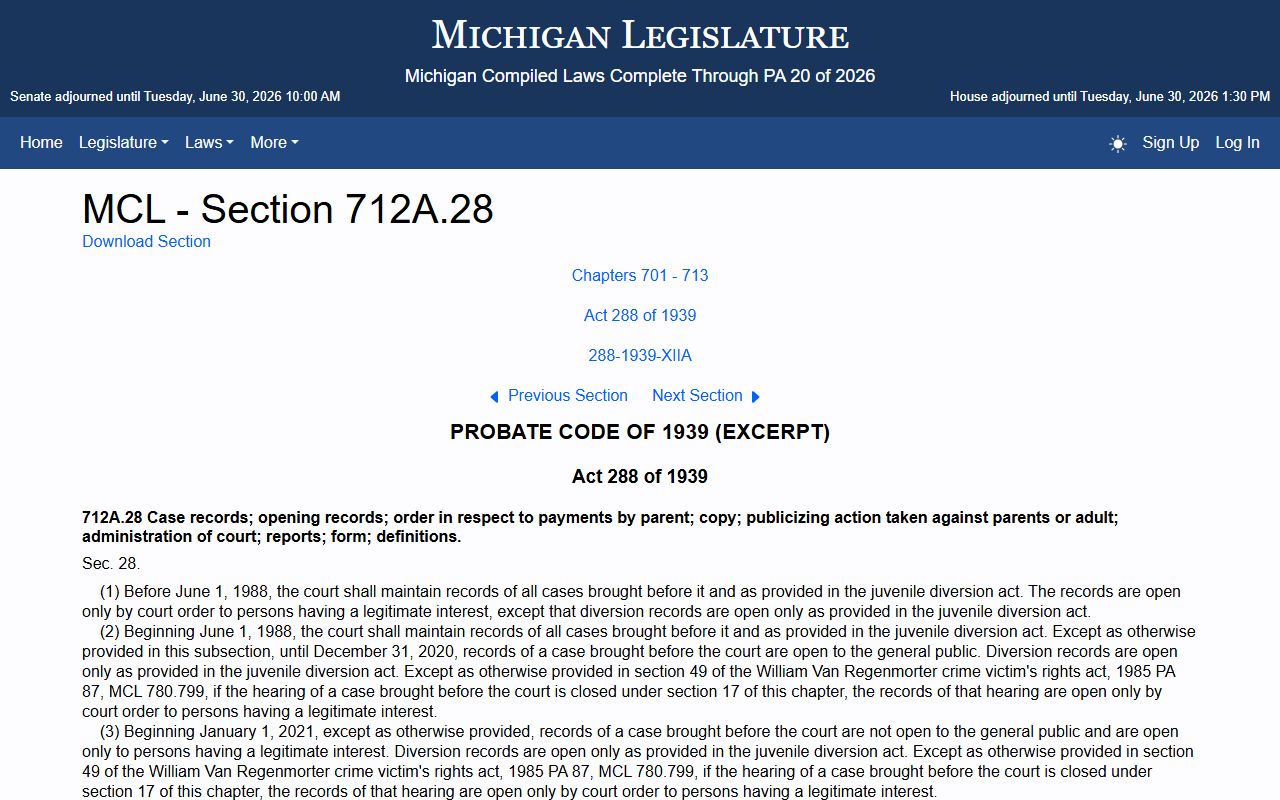
That rule is why a juvenile matter rarely surfaces in a routine public search the way an adult felony does.
Note: A public case search may confirm that a matter exists without opening the underlying documents, so a blank result is not always proof that no record is filed.
Background Check Considerations
A casual name search is not the same as a formal background check. Employers, landlords, and licensing boards that make decisions about a person must follow the federal rules for consumer reports. A court docket read for personal curiosity carries no such duty, but it also carries no guarantee of accuracy. When a decision has legal weight, a certified record from the Genesee County court is the safe source.
Important: This site is not a consumer reporting agency under the Fair Credit Reporting Act, and its data may not be used for employment, housing, credit, or other FCRA-regulated screening.